
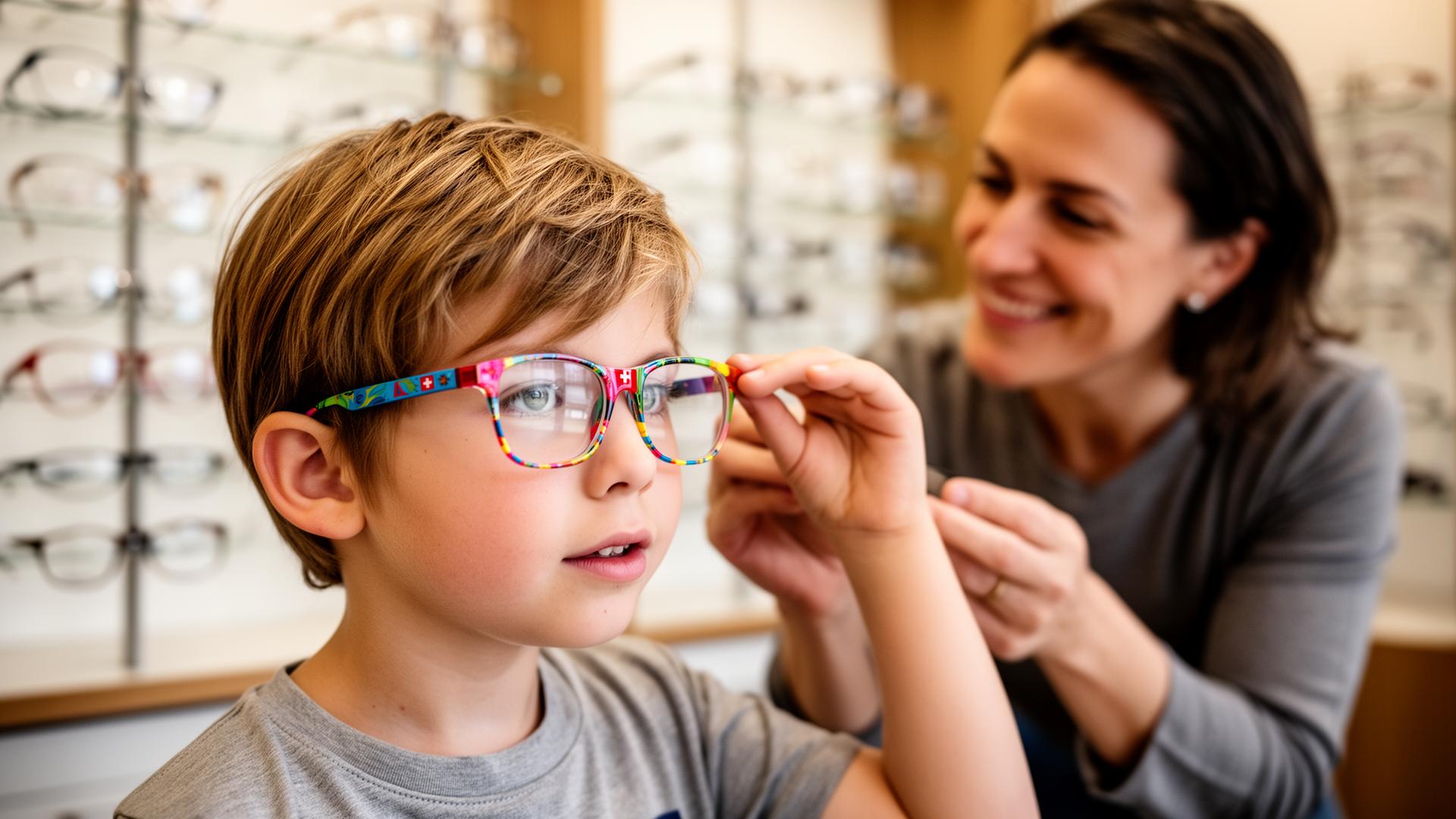
Glasses for children, understanding basic and supplementary insurance
For children and teenagers up to age 18, compulsory basic insurance may contribute to lenses or contact lenses under the applicable requirements. Supplementary insurance can provide additional benefits. What is decisive are the specific policy conditions.
- KVG may contribute
- up to 18 yrs
- check as a top-up
- VVG
- insurers compared
- 30+
- start a request
- 2 min
For children and teenagers up to age 18, basic insurance may contribute under the applicable requirements. A medical prescription may be relevant.
Children's eyes develop. Prescriptions can change more often, which should be considered when choosing a plan.
Replacement glasses, sports glasses or particularly robust frames are covered differently depending on the plan.
Supplementary insurance is a possible top-up, not guaranteed full funding. Conditions and acceptance vary.
Note: Supplementary insurance is governed by the VVG (Federal Insurance Contract Act). Depending on the insurer and plan, health questions, waiting periods, benefit limits, exclusions or reservations may apply. A contract is only binding once the insurer has accepted it.
Let us check which solution may make sense for your child's vision aid.
Please do not enter any medical diagnoses or confidential health details here. If such information is needed later, it will be clarified separately in the advisory process or by the insurer.
What to look for with children's glasses.
Careful statements, clear review criteria, personal advice.
Note the prescription
An ophthalmologist's prescription may be relevant for the possible basic insurance contribution and for many supplementary plans.
Frequent updates
Children's prescriptions can change more often. Periodic renewal conditions are worth a look on the plan sheet.
Replacement and sports glasses
Robust frames, replacement or sports glasses are covered or excluded depending on the plan.
Check a family plan
If further people are co-insured, a family plan may make sense, depending on conditions and acceptance.
What to look for when reviewing Children's glasses.
Instead of fixed amounts, what counts is the entire plan logic: scope of benefits, terms, waiting periods, health questions, recognised points of purchase and the fit with your personal needs.
Scope of benefits
- Lenses, frame: covered differently depending on the plan
- Replacement or sports glasses: plan-dependent
- Contact lenses: depending on conditions
- Repair / breakage: may be included or excluded
Terms & reservations
- Medical prescription: may be required
- Waiting periods: depending on insurer and plan
- Health questions: possible
- Periodic limits: e.g. yearly or multi-year
Proof & points of purchase
- Recognised points of purchase: optician, ophthalmologist
- Itemised invoice: prescription, lens, frame
- Check the KVG contribution: note the medical prescription
- Check a family plan: if further people are co-insured
FINWIWO AG operates as an insurer-neutral insurance broker. Specific benefits, limits and terms vary by insurer and plan. We review relevant Swiss insurers and present suitable options transparently and comprehensibly.
We compare 34 Swiss health insurers








And many more — 34 Swiss health insurers compared in total.
Related topics in the health insurer comparison.
Frequently asked questions, Children's glasses.
The most important answers, compactly summarised. If anything is missing, we'll advise you free of charge.
What does basic insurance pay for children's vision aids?+
For children and teenagers up to age 18, compulsory basic insurance may contribute to lenses or contact lenses under the applicable requirements. The specific requirements, amounts and documentation should be checked in the ordinance or, if needed, with your insurer.
What changes after the 18th birthday?+
From the age of majority, the specific children's contribution no longer applies. Supplementary insurance can continue to pay as a top-up under its conditions, provided the policy includes corresponding vision aids benefits.
Is a medical prescription required?+
An ophthalmologist's prescription or qualified proof may be relevant for both basic insurance and many supplementary plans.
Are sports or replacement glasses covered?+
That depends on the specific plan. Some products include additional vision aids such as sports or replacement glasses, others do not.
Can health questions or waiting periods apply?+
Yes. Supplementary plans may include health questions and set waiting periods. The acceptance decision rests with the insurer.
Is a consultation worthwhile for families?+
Since needs, conditions and acceptance decisions vary, a personal review is advisable. This gives a realistic idea of whether a plan fits the family situation.
Ready for the right vision-aid protection?
Start the request in 2 minutes. The personal review happens after submission. Waiting periods and acceptance conditions may apply depending on the insurer and plan; a contract is only binding once the insurer has accepted it.